
Recruit the right people, design the hour
Test your objective: could two colleagues read it and write different guides? Then it is too vague. Ask whoever commissioned the work, “What would you do differently if the answer were A rather than B?” If nothing changes, drop the question.
Screeners that keep out the wrong people
- Ask about recent facts, not likes. “When did you last buy ___, and where?” beats “Do you use ___?”
- Hide the answer you want. Read a brand list that includes two decoys. Anyone who ticks a decoy is guessing.
- Don't end on the key question. Close on a neutral one, so repeat applicants can't learn what got them in.
- Exclude the trade and the regulars: anyone in research, advertising or the category's industry, and anyone who took part in research on this category in the last three to six months.
- Re-screen at the start. “Just to confirm, when did you last buy it?” If the answer has changed, end politely and pay as agreed.
Example screener: hair oil home visit
S1 Age? (outside 22–55 → close politely)
S2 Who in your home usually buys hair oil? (not her → ask for that person)
S3 Which of these have you bought in the last four weeks? (five real brands, two decoys; a decoy → flag)
S4 When did you last buy it, and in what kind of shop? (over four weeks → close)
S5 Does anyone in your family work in advertising, research, or for a hair oil company? (yes → close)
S6 When did you last join a research discussion? (within three months → close)
S7 Quota fields: city, income band, brand used.
S8 Are you comfortable with a visitor at home for about an hour, with audio recording if you agree at the start?
B2B version: replace S2–S4 with “Which tools did your team evaluate in the last six months? Who signed off? What's your role?” and check the role against the company email or LinkedIn. Founder version: recruit from your own orders, plus two who abandoned checkout and two who bought once and never again.
How many is enough
There is no magic number, but the evidence gives a range:
- In a study of 60 interviews with a fairly similar group, most of the common codes had appeared by six interviews and the code list was stable by twelve (Guest, Bunce & Johnson, 2006).
- Across four different sites, common themes within one similar site needed 16 or fewer; themes that held across all sites needed 20–40 (Hagaman & Wutich, 2017).
- The usual “five users” comes from task-based usability testing. For exploratory interviews it is usually too few.
A plan you can defend: budget 8–12 per group you need to compare. Keep a running log of new things heard. When three interviews in a row add nothing new for a group, add one deliberately different person (a lapsed user, an extreme case). If that adds nothing either, stop for that group.
A 60-minute guide
| Min | Section | What happens |
|---|---|---|
| 0–5 | Welcome, consent | Purpose, recording, observers, right to stop, consent on tape. |
| 5–12 | Context | Household or role, routine. Easy and story-shaped. |
| 12–30 | The last time ★ | Trigger, choice, who else, problems, workarounds. |
| 30–42 | Deep dive ★ | Two or three priority guesses, probed through stories. |
| 42–52 | Stimulus | Pack, screen, concept. First reaction before any explanation. |
| 52–60 | Wrap-up | Door question, incentive, what happens next. |
Order rules: general before specific; her category before your brand; behaviour before opinion; sensitive topics late. If you run short, drop the concept reactions before you drop the stories. Pilot the guide on one or two people like your target, and time each section.
Pay fairly, and say so
Tell people the amount, who pays, when, and any conditions, both at recruitment and at the start. Don't pay in the sponsor's own products or in vouchers that need more spending (MRS Code of Conduct, rules 25–26). If someone chooses to stop early, pay in full: stopping is their right. Ask two or three local recruiters for current rates and note the figure in your method.
Fit the interview to the setting
Watching beats asking for behaviour. Asking beats watching for reasons. One-to-one beats groups for anything personal.
| You need to learn | Best setting | Watch out |
|---|---|---|
| What people actually do with a product | Home visit | Others in the room sway answers; homes get tidied for guests. |
| How people choose and buy | Shop-along | Noise, short attention; get the shopkeeper's permission first. |
| Private topics: health, money, hygiene | One-to-one, same-gender interviewer | Never a group. |
| Shared words, norms, quick reactions | Small group (6–8) | Loud voices set the answer; people copy. |
| Busy professionals, spread-out people | Video call | You lose the room. Ask them to show you things on camera. |
| Short, non-visual topics; low bandwidth | Phone | No faces. Say “mm” aloud; check understanding. |

Who's in the room
Before you start a home visit, ask: “Who else lives here? Is it okay if they sit with us, or would you rather talk just with me?” In many homes, a stranger asking to be alone with a woman is itself a problem, so offer options: the common room with others in a corner, or the kitchen while she works.
| Situation | Default |
|---|---|
| Spouse or elder present, shared purchase | Allow it, note who spoke, interview them too. They are part of the decision. |
| Spouse or elder present, personal topic | Ask kindly for privacy. If refused, stay on safe topics and follow up by phone later. |
| Neighbours drop in | Pause, let them settle, repeat consent for anyone who joins. |
| Someone answers for her | Redirect to her by name. A proxy answer is not her data. |
Indian home etiquette
- Confirm the day before; avoid the cooking rush, school pick-up and prayer time.
- Arrive on time, never early. Plain clothes, no sponsor logo.
- Shoes off if theirs are off. Greet elders first. “Aap”, never “tum”.
- Accept something, even a sip of water. Refusing everything can read as distance.
- Let her open the cupboard. Never open fridges, bedrooms or private shelves unless invited.
- Thank everyone, including the child and the elder who barely spoke.
Shop-along
- Ask the shopkeeper in person before you start.
- “Shop as you normally would. Think aloud, as if talking to yourself.”
- Walk slightly behind. Never point at shelves or suggest products.
- At a kirana counter the shopkeeper often picks the brand. Note what he suggests and whether she accepts.
- Afterwards, with the bag: “Tell me about the three things you picked.”
Video call
- Use the app they already have; WhatsApp video for many consumers.
- Day before: link, “use headphones, sit somewhere quiet and bright”.
- Open with: “If the line drops, I'll call you straight back.”
- “Can you hold the phone and show me the shelf?” turns a call into a tour.
- Ask, “Is anyone else in the room with you?”
- Recruit one or two extra people: someone's connection will fail.
B2B and experts
- To gatekeepers: “Twenty minutes on how your store decides which brands to stock. I'm not selling anything.”
- Ask the most important question first. Keep to the time you promised.
- Executives talk in conclusions. Ask for the last case: a date, a number, a person.
- Never interview a junior with their boss in the room.
- A distributor protects margin; a brand manager protects the brand. Interview several roles.
Running a small group
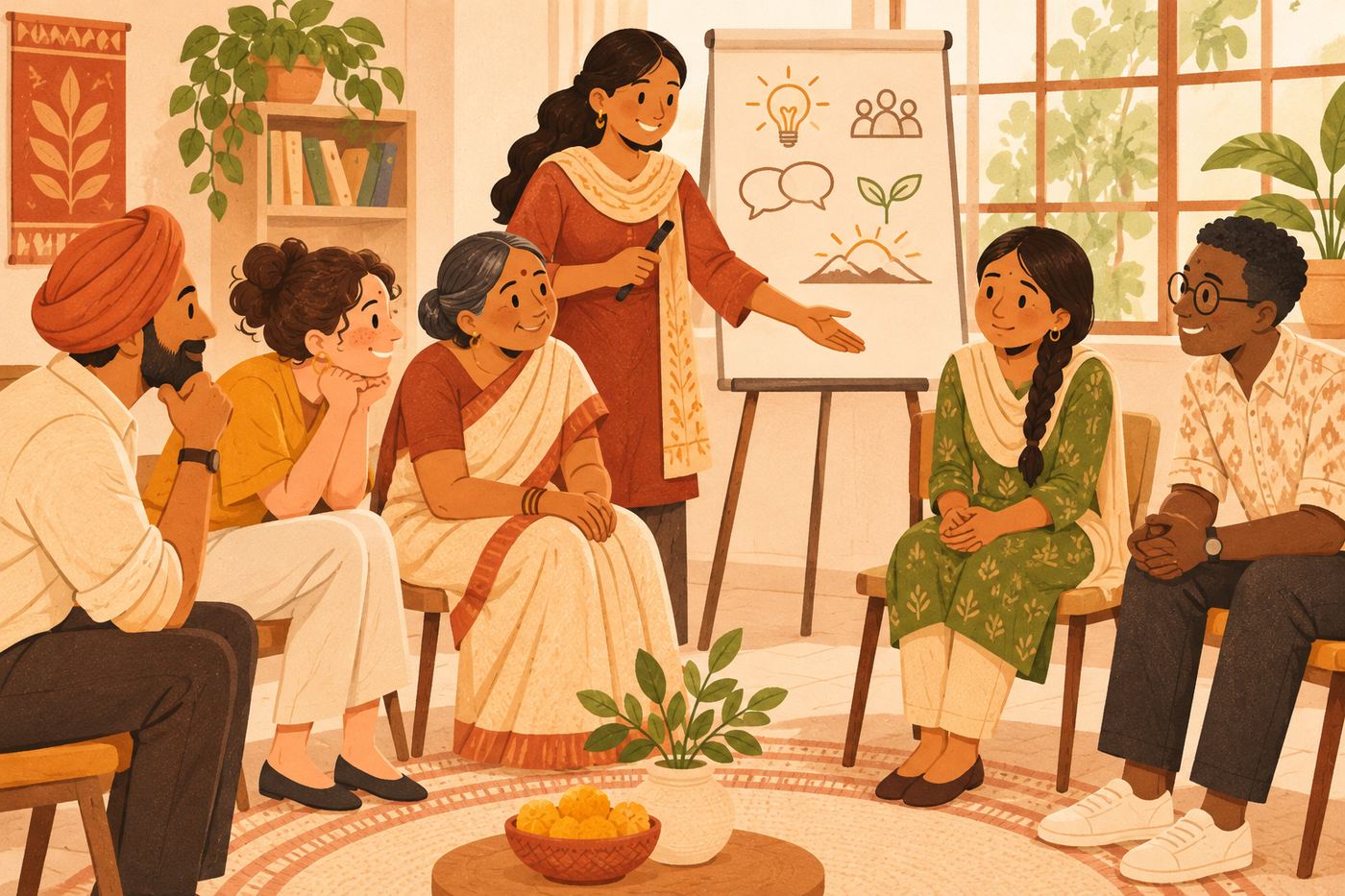
- Ground rules: “No right answers. One person at a time. I want different opinions. What's said here stays here.”
- Write first, then share. For key questions, everyone writes on a slip before anyone speaks. It stops copying.
- Dominator: turn your body away, then “Thank you. Let me hear from someone who hasn't spoken yet.”
- Too much agreement: “Who has done it differently?” or “What would make this a bad idea?”
- Recruit strangers. People from the same housing society perform for each other.
Get the story, not the opinion
Pick the incident on purpose
The Critical Incident Technique (Flanagan, 1954) asks people to recall one specific event instead of a general habit. Choose by recency and by extremes: the last time, a time it went well, a time it went wrong. Anchor it with time and place (“last Sunday, in the kitchen, before lunch?”), then go step by step: what happened, what she was thinking, what she did next.
Don't accept the summary. “It was a hassle” is a conclusion. “Take me to the moment it felt like a hassle. What was in front of you?” gets the evidence.
Three signals that you're being told what you want to hear
Rob Fitzpatrick's The Mom Test names three kinds of bad data, and how to turn each into something useful:
| You hear | It's really | Ask |
|---|---|---|
| “It's a great idea!” | A compliment | “When did this last come up for you? What did you do?” |
| “I usually…”, “I would…”, “I will…” | Fluff | “When was the last time?” |
| “You should add…” | A feature request | “What would that let you do? How do you manage now?” |
Polite cultures raise the base rate of “very good”. Weigh praise against what people did: time, money, a recommendation, a reorder.
The switch story
When someone recently changed brand, product or tool, interview them about that one switch, starting well before the purchase. Jobs-to-be-Done practitioners (Bob Moesta and colleagues) work through a timeline: first thought, passive looking, a trigger event, active looking, deciding, first use, ongoing use.
“Last Diwali my mother-in-law said the mill oil smelled burnt.”
“In March my son had a stomach upset. The doctor asked what oil we use.”
“I asked my neighbour. I read the labels in the shop and asked the shopkeeper.”
“I bought a one-litre pack to try. My husband said it was expensive.”
“The smell was different. My mother-in-law didn't like it for two weeks.”
“I buy five litres on offer. The loose oil is for pickles.”
Questions that drew it out: “When did you first think about changing?” “What happened that week?” “Who did you talk to?” “What nearly stopped you?” “How did the first meal taste?”
Twelve more swaps
Probe deeper without leading
The full probe kit
| Probe | Use when | Say |
|---|---|---|
| Example | She generalises | “Can you think of a time that happened?” “Pichli baar kab hua tha?” |
| Contrast | To find the edges | “How was that different from the time before?” “Pehle se yeh kaise alag hai?” |
| Feeling | The action is clear, the meaning isn't | “How did you feel at that point?” “Us waqt aapko kaisa laga?” |
| Reality check | She hypothesises | “Has that actually happened?” “Kya sach mein aisa hua hai?” |
| Her words back | You want to summarise | “‘A bit annoying.’ Tell me about that.” Never “So you hate it?” |
| Softer “why” | “Kyun” can sound like an accusation | “Us waqt aapke dimaag mein kya chal raha tha?” (What was going through your mind?) |
A probe must not carry content. “Was it because of the price?” is a leading probe. “What else was going on?” isn't.
A clean probe sequence
Her:I stopped buying it. It was not good.
(Silence. Nod.)
Her:The taste changed.
You:Changed…?
Her:After the lockdown, it became bland.
You:Can you remember the last packet you had?
Her:In the summer. I made dal and my father-in-law said, “What did you put in this?”
You:What did you do then?
Her:I added more masala, then went back to the old brand.
“Not good” became a specific change, a dated event and an action, in five turns with nothing leading.
What people say, what people do
- Ask for proof, kindly. “Can I see the packet?” “Could you show me the order on your phone?”
- Normalise the less flattering answer. “Many people tell me they skip it on busy days. How was it for you?”
- Offer both sides. “Some people find it easy, others find it hard. How was it for you?”
- Don't argue with a contradiction; get curious. “Earlier you said you cook every day, and I see the order list here. Tell me about a day you didn't cook.”
- You change the answers too: your age, accent, clothes and a company logo all shift them. Leave the logo at home.
Notes while you moderate
Record, so your eyes stay on her. On paper, three narrow columns: Said (her words), Saw (the room, her hands, her tone), Follow up. Write the minute next to anything striking. If you work in pairs, one asks and the other writes; the note-taker gets one or two questions at the end.
Show the thing without asking “do you like it?”
“Do you like it?” gets a polite yes. Ask what people notice, what they think it is, who it's for, and what they'd do next.
- “Look at this for a moment, then tell me out loud what you notice.”
- “What do you think this is? Who is it for?”
- “What's the main thing it's telling you?”
- “What's unclear, or doesn't feel right?”
- “Where would you expect to see it? What would you do next?”
- Rotate the order when you show more than one: A then B, B then A. Note the order for each person. The first thing shown is judged against nothing; the second against the first.
- Show it the way life does: a pack beside real competitors, an ad on a phone with sound.
- For price, don't ask “would you pay ₹249?” Ask what they'd expect it to cost, at what price they'd start to doubt the quality, and at what price it's too much.
- Read in four steps: noticed, understood, believed, wanted. “I like it” at the first step means nothing if she can't say what it is at the second.
From notes to findings people will trust
Debrief the same day
Fifteen minutes. Everyone writes silently for three minutes first, then shares, so the loudest person doesn't set the story. Ask: What did we hear? What surprised us? What did each of us see that the other missed? What do we change tomorrow? If two of you read a moment differently, log both and note the minute that could settle it.
Transcripts in more than one language
- Transcribe in the language spoken. Pick Devanagari or one consistent Roman spelling, and say which.
- Keep code-switching as spoken. “Mujhe quality achhi lagi, but price thoda high hai” tells you which words live in English for this category.
- Translate in a second pass, in a separate column labelled “translation”, with the original beside it.
- Mark doubtful translations [?] and have a native speaker check idioms. A literal idiom can reverse the meaning.
- Machine transcripts get brand names, mixed speech and overlapping voices wrong. Never quote a line you haven't heard.
Code with a codebook
Start with a short list of expected codes from your research questions, then add new ones when the data demands it. Keep each code in a table:
| Code | Means | Use when | Don't use when | Example |
|---|---|---|---|---|
| Kept for guests | Product stored or used mainly for visitors | She says it's for guests or occasions | She just says it's “special” with no audience | “Yeh wala mehmaan aate hain tab nikaalti hoon.” (R04, 12:40) |
Fifteen to forty codes for a ten-interview study. Revise after the first three transcripts and date each version. The “don't use when” column stops codes drifting.
Affinity walls that lead somewhere
One observation per note, with the person's ID and minute on it: [R03, 14:20]. Group notes that say similar things, keep outliers, and duplicate a note that fits two groups (Nielsen Norman Group). Then write one sentence per cluster that makes a claim. A wall of topic labels (“Price”, “Packaging”) isn't a finding yet.
Count prompted and unprompted separately
| Claim | Unprompted | Prompted | Said the opposite |
|---|---|---|---|
| Smell matters | 2 of 8 raised it first | 8 of 8 agreed when asked | 0 |
| Pouch tears early | 3 of 8 | 1 of 8 | 1 of 8 |
Example numbers. Unprompted means she raised it before you or the guide did. The first row says smell is rarely front of mind, even though everyone agrees it matters when asked. Those are different findings.
Heard, means, do
Heard: In 5 of 8 homes the branded bottle sat unused while coconut oil in a steel container was in daily use. Four said the branded oil “makes hair sticky” (R02 14:20, R05 06:12, R06 31:40, R08 09:55).
Means: Stickiness is the stated reason, but two of the four also keep the bottle for guests, so the bottle may be doing a status job, not a hair job.
Do: Test a lighter-formula claim with the “sticky” group. Separately, test whether a gifting pack is a real use.
Mark each line as observed (we saw it), reported (she said it) or inferred (we reasoned it). An implication resting on an inference needs a “test next”, not a launch.
Evidence rules
- Read the question before every quote. If you asked “so it's too expensive?”, the yes is yours.
- Choose quotes before choosing favourites. List all quotes for a theme, then pick the most typical. Say so if you pick a vivid one.
- Spread quotes across people. One articulate respondent shouldn't carry the whole report.
- Report dissent in a line for every pattern: “Two did the opposite: …”
- Check the quote holds the claim. Read alone, does this sentence say what your headline says?
Pick the format for the decision
| Format | When | Contains |
|---|---|---|
| Topline, 1–2 pages | Answer needed in 48 hours | Five findings, a quote each, three actions, a sample note |
| Debrief deck | Team decision meeting | Objective, who we met, heard / means / do, dissent, next steps |
| Pen portraits | Make types memorable | One page per type, built from real people, never invented |
| Journey map | A process with many steps | Stages, actions, quotes, pain points |
| Clip reel, 2–4 min | Stakeholders doubt summaries | Five to eight clips with ID and subtitles; consent checked |
Lead with the answer, put the method at the back, and say “small sample, not statistically representative” in plain words at the front.
Four drills for this month
Mock and swap
Pair up. Interview each other for fifteen minutes about something ordinary, like choosing a phone recharge plan. Give feedback against this page, then swap.
Shadow a good interviewer
Watch their recording. Ignore the content; write down every probe they used and what it unlocked. Then ask them why they probed there.
What wasn't said
Read one transcript and list three topics the person avoided or rushed. Plan how you'll approach them next time.
Audit your quotes
Take the five quotes in your last report. For each, check the audio, the speaker, the question before it, and whether it holds the claim. Count the failures.
Check yourself
You asked “So it's mostly about the price?” and she said “Yes.” What is that quote worth?
Little. You supplied the answer. Report it as prompted, or don't use it as evidence of what matters to her.
Three raised smell unprompted; all eight agreed when asked. How do you report it?
Separately: “Unprompted: 3 of 8. Prompted: 8 of 8 agreed.”
Your affinity wall has fourteen clusters labelled by topic. What's missing?
A claim per cluster, notes traceable to ID and minute, and a check against the people who disagree.
A respondent switches between Hindi and English mid-sentence. How do you transcribe it?
As spoken. Translate separately, label it as translation, keep the original beside it.
Ready for Advanced when:
- You've run thirty or more interviews with at least three different kinds of people.
- Others rate your recordings neutral and probing, in settings that aren't your usual ones.
- You find and report dissent, and your claims survive it.
- You can explain why you stopped when you did.
- You've worked across a language gap and checked the translations.
The counts are our rule of thumb, not an industry standard.
Advanced: design, technique and defending the study
Projective methods, laddering, hard settings, reflexive analysis, AI checks and coaching others.
Sources
- Guest, G., Bunce, A. & Johnson, L. (2006). How many interviews are enough? Field Methods 18(1), 59–82.
- Hagaman, A. K. & Wutich, A. (2017). How many interviews are enough to identify metathemes in multisited and cross-cultural research? Field Methods 29(1), 23–41.
- Flanagan, J. C. (1954). The Critical Incident Technique. Psychological Bulletin 51(4), 327–358.
- Fitzpatrick, R. (2013). The Mom Test. Moesta, B. (2020). Demand-Side Sales 101.
- MRS Code of Conduct 2023: incentives (rules 25–26), recording and consent (29–31), observers (39–41).
- Nielsen Norman Group: Affinity diagramming; Remote UX research.
- Squires, A. (2009). Methodological challenges in cross-language qualitative research. International Journal of Nursing Studies 46(2), 277–287.